
+86 183 6377 3366


China Top 10 Beer Glasses Manufacturers for Global Buyers examines a market shaped by hospitality growth, craft brewing, and international sourcing. The global beer market continues expanding, creating steady demand for durable, attractive, and export-ready Beer Glasses. Grand View Research identifies premiumization and changing drinking occasions as important beer-market trends. These trends influence glass design, from heavy-base pint glasses to branded tulip and pilsner styles.
The numbers deserve careful reading. Fortune Business Insights also reports continued growth in the global beer sector, although estimates vary by research method and market definition. That variation matters for buyers planning inventory. The details matter. A factory’s product photographs cannot prove production capacity, glass composition, or quality consistency.
This guide evaluates leading Chinese manufacturers through practical purchasing criteria. These include manufacturing experience, export records, customization capability, packaging strength, minimum order quantities, and documented quality controls. Buyers should request food-contact test reports, lead and cadmium results, dimensional samples, and carton drop-test evidence. ISO 9001 certification may support process control, but it does not replace product-specific inspection.
China’s glassware industry offers broad design flexibility and competitive pricing. However, lower quotes can hide thicker packaging needs, inconsistent rims, or unclear mold ownership. Not every factory fits. Breweries may prioritize branding, while distributors often need stable replenishment and mixed-container efficiency. The Brewers Association’s industry reporting shows how varied brewery sizes and business models can be, reinforcing the need for supplier matching rather than simple ranking. This introduction is a practical starting point, not a guarantee. Independent verification remains essential before signing contracts or approving large shipments.

China’s beer glass industry supports one of the world’s largest beer markets. Kirin Beer University’s 2023 report recorded China’s beer consumption at about 40.5 million kiloliters. China remained the leading market for the 21st consecutive year. This demand encourages manufacturers to improve mold accuracy, glass clarity, thermal resistance, and export packaging.
Industry scale also strengthens China’s global role. UN Comtrade data consistently place China among the major exporters of glassware. Manufacturers serve breweries, hospitality suppliers, and importers across many regions. The strongest suppliers usually provide food-contact documentation, controlled annealing, impact testing, and stable production records. However, catalog photos can hide quality differences. That remains a practical concern for global buyers.
Tips: Ask for sample testing before bulk orders. Check rim thickness, base balance, logo durability, carton protection, and breakage records. Compare these details with your delivery conditions. A lower unit price may create higher replacement costs. Some factories also need clearer communication about testing standards and seasonal capacity. According to packaging research from Smithers, glass remains valued for product protection and premium presentation, but transport efficiency still challenges buyers. That trade-off deserves careful review.
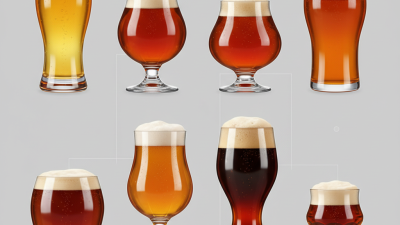
China’s top beer glass manufacturers should be ranked by evidence, not attractive catalogs. A reliable assessment begins with factory experience, production capacity, and verified export history. Buyers should request recent samples, inspection records, and references from comparable markets. A factory may claim high output, but uneven rim thickness can reveal weak process control.
Product quality deserves the greatest weight. Check glass clarity, wall thickness, weight tolerance, thermal resistance, and logo durability. Test several batches, not one perfect sample. Manufacturing facilities should also demonstrate documented quality systems, traceable materials, and consistent packaging standards. Capacity matters, but it should match the buyer’s order size. Excessive capacity claims can be difficult to verify.
Tips: Compare at least three suppliers using the same checklist. Ask for sample measurements and carton photos. Confirm mold ownership, replacement terms, minimum order quantities, and realistic lead times. Evaluate communication carefully; delayed or vague answers may create problems after payment. Compliance documents should be current and relevant to the destination market. Sustainability can support the ranking, especially when factories reduce water use, improve furnace efficiency, or use recycled glass. However, environmental claims need evidence. This ranking method is not perfect. Factory visits may show only selected areas, and one audit cannot predict every future shipment. A balanced review should combine technical testing, commercial records, and direct buyer experience.
| Rank | Evaluation Criterion | Suggested Weight | Key Data to Verify | Relevant Standard or Buyer Requirement |
|---|---|---|---|---|
| 1 | Product Quality and Consistency | 20% | Dimensional tolerance, rim quality, wall-thickness consistency, visual defect rate, and batch-to-batch repeatability | Approved sample inspection, AQL-based inspection, and documented quality-control procedures |
| 2 | Food-Contact Safety | 15% | Material declarations, heavy-metal test reports, migration testing, and traceability of raw materials | EU Regulation (EC) No. 1935/2004, applicable national requirements, and destination-market food-contact rules |
| 3 | Manufacturing Capacity | 12% | Monthly output, number of production lines, furnace capacity, molding capability, and peak-season availability | Capacity should be supported by production records, factory audits, and confirmed allocation plans |
| 4 | Export and Packaging Capability | 10% | Export documentation, carton design, palletization, container loading, breakage-control procedures, and shipping experience | Packaging must protect glassware during international multimodal transportation |
| 5 | Customization and Product Development | 10% | Mold development, logo decoration, color options, capacity variations, prototyping, and engineering support | Sample approval should cover appearance, dimensions, capacity, decoration, and functional performance |
| 6 | Thermal and Mechanical Performance | 9% | Thermal-shock resistance, impact resistance, rim strength, base stability, and resistance to repeated handling | EN 1183 may be used for thermal-shock testing where applicable; buyer specifications should define acceptance limits |
| 7 | Dishwasher and Commercial-Service Suitability | 8% | Resistance to repeated washing, haze formation, decoration durability, and suitability for bars, restaurants, and hotels | EN 12875-1 can support dishwasher-resistance evaluation for relevant tableware applications |
| 8 | Certifications and Factory Management | 6% | Quality-management certification, environmental controls, audit results, corrective-action records, and production traceability | ISO 9001 is relevant to quality management; ISO 14001 may support environmental-management assessment |
| 9 | Pricing and Total Cost of Ownership | 5% | Unit price, tooling charges, decoration fees, packaging cost, freight efficiency, defect allowance, and replacement policy | Compare like-for-like specifications rather than unit price alone |
| 10 | Lead Time and Customer Support | 5% | Sample lead time, tooling schedule, production lead time, response speed, complaint handling, and after-sales support | Performance should be verified through purchase-order records, communication logs, and reference checks |
| Total Ranking Weight | 100% | Use verified documents, samples, factory audits, and shipment records when scoring suppliers. | ||
Ranking framework: score each manufacturer from 1 to 10 for every criterion, multiply the score by the suggested weight, and rank suppliers by the resulting weighted total. No company or brand-specific data is included.
The top ten Chinese beer glass manufacturers serve different buyer needs. Their profiles reveal strengths beyond attractive catalogs. Some focus on classic pint glasses, while others produce handled mugs, stemmed beer glasses, and tasting sets. Several operate soda-lime glass lines with automated forming equipment. Others emphasize hand-finished shapes for hospitality projects. Their export experience often includes carton design, pallet protection, and container loading plans.
Quality depends on more than appearance. Reliable factories inspect rim thickness, capacity, weight, and thermal resistance. They should provide material declarations, test records, and production samples before large orders. Many support logo printing, sandblasting, color coating, and custom molds. Buyers should check decoration durability after repeated washing. This detail is sometimes overlooked. It can create costly complaints later.
The strongest profiles combine engineering support with practical communication. Their teams can review drawings, recommend wall thickness, and explain mold limitations. Some manufacturers maintain food-contact documentation and traceability systems. Others rely heavily on external testing, which may slow approvals. That is not automatically a weakness, but buyers should understand the process. Factory visits, video inspections, and independent sampling can improve confidence. No manufacturer is perfect. Even experienced suppliers may face delays during mold changes or peak shipping seasons. Clear specifications and realistic lead times remain essential when comparing China’s leading beer glass producers.
China’s top 10 beer glass manufacturers for global buyers should be judged beyond catalog photos. Quality begins with stable raw materials, controlled melting, and accurate forming. Inspect rim smoothness, wall thickness, clarity, and base stability. A well-made glass should feel balanced in the hand. It should also survive repeated commercial washing without clouding or cracking.
Customization separates capable factories from simple resellers. Ask about logo printing, laser engraving, color coatings, unique shapes, and protective packaging. Confirm mold development costs and sample approval procedures. Production capability matters too. Reliable manufacturers should explain furnace capacity, daily output, inspection stages, and export packing methods. Request test reports, factory evidence, and a clear replacement policy. Some suppliers speak confidently, yet their samples reveal uneven logos or weak carton protection. That detail deserves attention.
Tips: Compare three physical samples before ordering. Check the rim with your fingertips. Measure volume and weight. Ask for dishwasher testing when relevant. Keep specifications in writing. A practical buyer should also review lead times and production tolerances, not only the lowest quotation. Mistakes can happen, even with experienced suppliers. The best response is transparent correction, documented inspection, and a realistic delivery plan.
This chart compares common beer glass capacities used by global buyers. The 473 ml U.S. pint and 568 ml imperial pint are standardized serving references; other capacities represent widely used commercial formats and may vary slightly by supplier, design, and market.
Selecting Chinese beer glass manufacturers requires more than comparing catalog prices. Global buyers should review production experience, glass quality, and export capability together. Ask for factory photos, production videos, and recent quality records. A serious supplier should explain its molding process, annealing controls, and inspection standards clearly. Do not trust polished photos alone.
Request physical samples before placing a large order. Check rim smoothness, wall thickness, logo accuracy, capacity, and stability on a wet table. Measure several glasses, not just one. Small differences can affect customer satisfaction and packing efficiency. Confirm food-contact documentation, test reports, carton strength, and pallet specifications. These details often reveal how carefully a factory works.
Sourcing discussions should cover minimum order quantities, tooling costs, production schedules, payment terms, and shipping responsibilities. Confirm whether prices include export packaging and inspection support. Independent pre-shipment inspection is useful, especially for first-time cooperation. I have learned that the lowest quotation is rarely the lowest total cost. Breakage, delayed loading, or unclear replacements can erase the savings. Even experienced buyers can miss one detail. Keep written records of approved samples and tolerances. Communication may still become imperfect across languages and time zones, so repeat critical points. A dependable manufacturer responds with evidence, not vague promises.