 +86 183 6377 3366
Leave Your Message
-
Contact Phone
-
 Contact Email
Choosing the right Glass Cream Jar involves more than comparing colors, shapes, and prices. The jar must protect the cream, support safe use, and fit the brand’s practical goals. A thick 30 ml jar may feel luxurious, but it can also increase shipping weight. A clear jar looks elegant, yet sunlight may affect sensitive formulas. Small decisions matter.
Packaging specialist Dr. Elena Morris offers a useful reminder: “A beautiful jar must protect the formula before it sells the story.” Her point deserves attention. Check the glass type, wall thickness, neck finish, lid fit, inner liner, and surface coating. Confirm that the material suits oils, acids, fragrances, and preservatives. A compatibility test is essential. Never trust appearance alone.
This guide presents ten practical tips for choosing the best Glass Cream Jar. It considers product safety, customer handling, filling efficiency, decoration, sustainability, and total cost. You will also see why a wide opening helps customers use thick creams, while a narrow opening may reduce exposure. Details become visible here. A loose cap can ruin a premium experience. A heavy base can improve stability but complicate transport. Refillable designs may sound ideal, though cleaning and sealing requirements need careful review. There is no perfect jar for every formula. That is easy to forget. The strongest choice comes from testing real samples, not only studying a supplier’s catalogue.
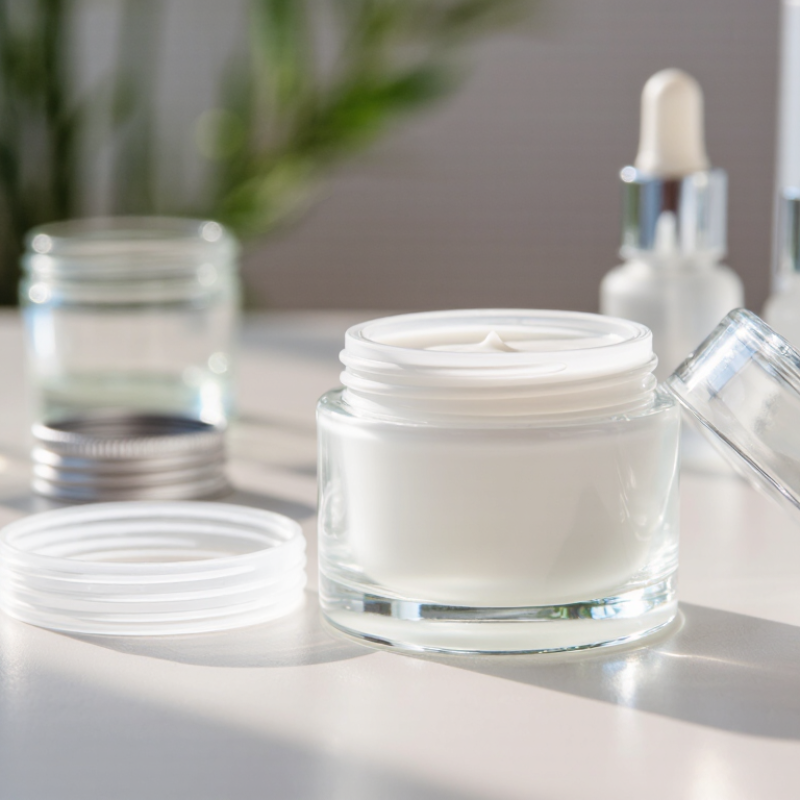
Choosing the best glass cream jar starts with the formula, not the appearance. Oils, acids, botanical extracts, and high-water emulsions can react differently with closures, coatings, and seals. Check compatibility through stability testing at room temperature, heat, and freeze-thaw conditions. ISO 22716 emphasizes controlled cosmetic manufacturing, but packaging suitability still requires product-specific testing. A formula may look stable for two weeks and fail later.
Volume must match real usage. A 15 ml jar suits an eye cream or concentrated balm. A 50 ml jar often fits daily facial cream routines. Measure the intended dose, application frequency, and expected service period before selecting the jar. Grand View Research valued the global cosmetic packaging market at over 30 billion US dollars in 2023, showing how strongly packaging design influences product development. Still, a larger jar is not automatically better. Excess headspace may increase oxidation risk and create a poor user experience.
Usage conditions matter just as much. Will consumers use clean fingers, a spatula, or wet hands in a bathroom? Wide openings improve access, but they can increase exposure to air and repeated contact. The Sustainable Packaging Coalition reports that packaging decisions should consider material use, recovery, and product protection together. Glass offers a substantial, premium feel, yet it adds weight and breakage concerns during transport. The first sample is rarely perfect. Test the filled jar, closure torque, label adhesion, and drop resistance before approval. Small details often reveal the real problem.
| No. | Selection Dimension | Recommended Specification | Best-Fit Product Requirement | Key Reason | Verification Method |
|---|---|---|---|---|---|
| 1 | Formula Type | Match the jar to the product’s viscosity, oil content, water content, and active ingredients. | Creams, balms, masks, scrubs, gels, and solid or semi-solid formulas. | Glass is generally non-reactive and provides strong protection against formula migration and odor absorption. | Conduct compatibility, stability, and odor-transfer tests using the final formula. |
| 2 | Glass Composition | Use soda-lime glass for most cosmetic creams; consider borosilicate glass for demanding thermal or chemical conditions. | Standard room-temperature cosmetics or products exposed to wider temperature variation. | The glass type affects chemical resistance, thermal performance, weight, and cost. | Request the material specification and perform thermal-shock testing where applicable. |
| 3 | Nominal Volume | Select a nominal capacity such as 15 ml, 30 ml, 50 ml, 100 ml, or 200 ml according to the intended fill size. | 15–30 ml for trial or travel products; 50 ml for common facial creams; 100–200 ml for body products. | The correct volume improves portion control, shelf presentation, shipping efficiency, and consumer convenience. | Confirm usable fill volume, headspace, and the product’s density before finalizing the jar. |
| 4 | Opening Diameter | Choose a wide-mouth opening for thick formulas and a smaller opening for controlled dispensing or compact packaging. | Wide openings are suitable for masks, body butters, scrubs, and high-viscosity creams. | The opening must allow clean filling and easy product removal without excessive residue around the neck. | Test filling, capping, label placement, and consumer access with the actual formula. |
| 5 | Usage Method | Use a standard screw cap for fingertip access; add an inner lid or spatula when hygiene is important. | Home-use creams, professional treatments, travel products, and single-user formats. | Repeated finger contact can introduce moisture and microorganisms into the product. | Evaluate opening torque, closure fit, dispensing comfort, and the product’s preservation system. |
| 6 | Light Protection | Use amber, green, opaque-coated, or externally packaged glass when the formula is light-sensitive. | Products containing light-sensitive botanical extracts, fragrances, pigments, or oxidation-prone ingredients. | Visible and ultraviolet light can contribute to color, odor, and active-ingredient changes. | Run photostability testing in the selected container and compare it with a protected control. |
| 7 | Closure and Seal | Specify cap material, liner type, thread profile, and sealing performance together with the jar. | Formulas requiring protection from leakage, evaporation, contamination, or fragrance loss. | A compatible closure helps maintain product quality during storage, transport, and repeated use. | Perform leak, vacuum, torque, transport, and accelerated-aging tests. |
| 8 | Wall Thickness and Durability | Choose a design that balances impact resistance, weight, appearance, and shipping conditions. | Products shipped by parcel, displayed in retail stores, or used in bathrooms and spas. | Thicker or reinforced designs can reduce breakage risk but usually increase weight and logistics cost. | Check visual defects, dimensional consistency, drop performance, and packed-shipment durability. |
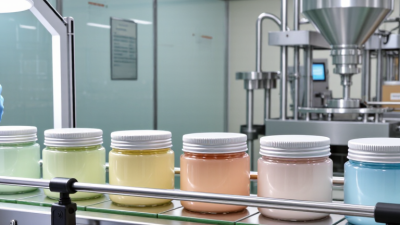
| 9 | Filling and Production Fit | Confirm jar dimensions, filling temperature, line speed, cap application, and label area before mass production. | Small-batch handmade filling as well as automated high-volume filling lines. | A visually attractive jar may still cause filling variation, line stoppages, or closure problems if dimensions are unsuitable. | Conduct a production trial using the intended equipment and filling process. |
| 10 | Sustainability and End Use | Prefer recyclable glass, appropriate packaging weight, reusable designs, and clear disposal instructions. | Refillable, reusable, premium, and environmentally conscious product lines. | Glass is widely recyclable, but heavier packaging can increase transport emissions and shipping costs. | Compare total packaging weight, recycled-content options, transport impact, and end-of-life guidance. |
Note: Final jar selection should be confirmed through formula compatibility, stability, microbiological, light-exposure, leakage, and transport testing using the finished product and complete packaging system.