+86 183 6377 3366


Global sourcing teams choose packaging for more than its appearance. A Glass Food Jar offers a clear view of its contents, a substantial feel, and a familiar format for pantry goods, sauces, and spreads. Buyers can compare capacities, mouth openings, closure options, and label areas against real product needs. Small details matter. A jar that looks right in a catalog may be awkward to fill or difficult to pack efficiently.
The sourcing decision also depends on how the jar performs beyond the sample stage. Ask suppliers for dimensional specifications, material details, production tolerances, and food-contact documentation relevant to the intended market. Review sample jars with the actual product and closure, then check sealing, handling, and label fit. Transit deserves attention too: glass can arrive chipped if dividers, cartons, or pallet layouts are poorly matched to the route. Request packaging details and, where practical, assess a shipment before scaling orders.
The trade-offs are real. Glass is heavier than many alternatives, and freight costs or breakage risks may affect the landed price. Yet buyers may value its transparency, reusable potential, and compatibility with established retail presentation. No single supplier is automatically the best fit. Clear specifications, consistent communication, and evidence from samples help teams make a more grounded choice—though even careful checks cannot remove every surprise.
Glass food jars are defined by more than transparency and shape. They combine food-contact glass, a compatible closure, controlled dimensions, and traceable production. The glass must resist thermal shock, pressure changes, and interaction with acidic or oily foods. In global trade, these details affect filling lines, customs descriptions, pallet design, and product protection.
Material consistency matters. FEVE industry data indicates that one tonne of recycled glass can replace about 1.2 tonnes of virgin raw materials. It can also reduce energy use during melting. However, recycled content varies by factory and market. Buyers should request batch records, migration test results, and closure compatibility evidence. A clear jar is not automatically a safe jar.
Weight remains a difficult trade-off. Eurostat reported 186.5 kilograms of packaging waste per EU resident in 2022, covering all packaging materials. Glass may support repeated recycling, but heavier shipments can increase freight emissions and breakage exposure. Experienced buyers therefore compare wall thickness, jar geometry, pallet efficiency, and transport distance together. Small design changes matter. A wider base may improve stability, yet increase material use. A lighter jar may reduce freight weight, but fail during handling. These compromises should be tested through drop trials, thermal cycling, and real filling conditions before long-term sourcing.
Glass food jars support safer storage because their material is stable, nonporous, and resistant to many food acids. Unlike some plastics, glass does not readily absorb oils, aromas, or pigments from sauces. A properly manufactured jar can therefore preserve the original taste of tomato paste, spices, or pickled vegetables. It also creates a clear inspection surface. Buyers can see cracks, chips, cloudiness, and foreign particles before filling or shipment.
Regulatory control still matters. The U.S. Food and Drug Administration lists glass among established food-contact materials, while Regulation (EC) No. 1935/2004 requires food-contact articles to avoid harmful transfer under normal use. The container alone is not enough. Closures, coatings, inks, and seals may influence migration and odor performance. In sourcing audits, I would request food-contact declarations, thermal-shock tests, and closure compatibility data. Small details matter. A jar that survives filling may fail during sudden cooling. This is easy to underestimate.
Glass also supports circular sourcing decisions. Eurostat reported that the European Union recycled about 75% of glass packaging waste in 2021, based on its 2023 packaging-waste statistics. Recycled cullet can reduce the need for virgin raw materials, but collection quality varies between markets. Transport remains a weakness because glass is heavy and breakable. Packaging teams should compare pallet density, protective materials, and regional filling locations. “Recyclable” sounds reassuring, yet local infrastructure decides whether that benefit becomes real.
Why Choose Glass Food Jars for Global Sourcing?
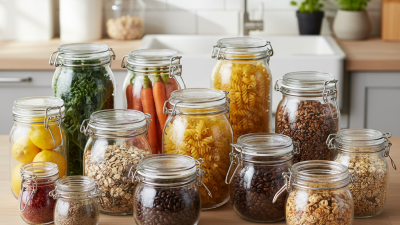
Jar design should follow the food’s texture, filling process, and consumer use. Thick jams, chutneys, and pasta sauces suit wide-mouth jars with straight sides. They support quick filling and easier scraping with a spoon. Pickles and whole vegetables often fit taller jars with narrower openings. The shape helps reduce brine exposure after opening. Dry foods, including grains and powdered ingredients, benefit from square or stackable jars. They use warehouse space efficiently, although corners may increase stress during transport.
Small glass jars with controlled openings work well for spices, seeds, and powdered seasonings. A shaker insert can manage portion size. Dark or tinted glass may help protect light-sensitive ingredients. Honey and syrups need strong closures and generous necks because sticky residues can weaken sealing performance. According to Smithers’ glass packaging market analysis, food remains one of the major end-use sectors, making closure compatibility and filling efficiency important sourcing factors.
Heat-processed foods require more than attractive shapes. Suppliers should test thermal shock, vacuum performance, and closure torque with the actual recipe. The Glass Packaging Institute states that glass is endlessly recyclable without losing purity. FEVE industry data also reports European glass packaging collection above 80%. These figures support glass’s circularity, but transport weight still affects emissions and freight costs. The perfect jar does not exist. A lighter design may improve logistics, yet it can reduce impact resistance. Testing should decide the compromise, not a catalogue image.
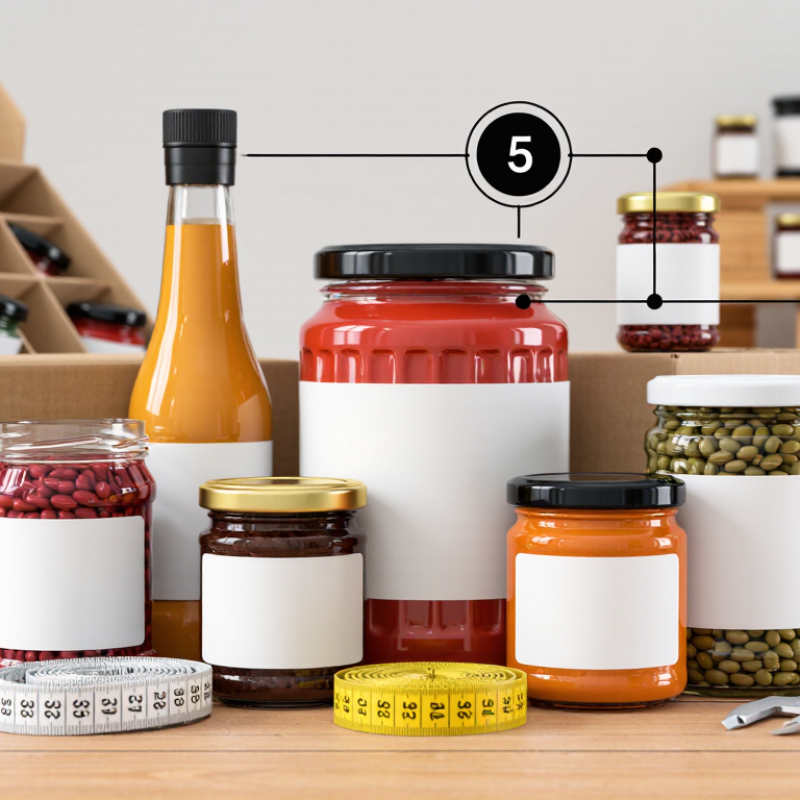
Wide-mouth, straight-sided jars are practical for products that are scooped or contain whole pieces, such as jams, pickles, honey, and dry foods. Shoulder-shaped jars with a standard opening are commonly used for pourable products such as pasta sauce. The ranges shown are indicative retail net-fill sizes in grams and may vary by market, recipe, and pack format.
Glass jars remain attractive for global sourcing because they protect flavor and support repeated recycling. Yet buyers should evaluate more than appearance.
Start with food-contact compliance in every destination market. Request migration test reports, material declarations, and batch traceability. Check the glass composition, closure liner, seal compatibility, and sterilization limits. The International Organization for Standardization provides packaging guidance, but local authorities may require additional evidence. A familiar mistake is accepting one laboratory report for every market. That assumption can create delays.
Physical performance deserves equal attention. Compare wall thickness, neck finish, fill volume, weight, and dimensional tolerance. Ask for thermal-shock testing if jars face hot filling or rapid cooling. Inspect samples under factory lighting, then repeat inspection after transport simulation. Pallet strength matters. So do dividers, carton moisture resistance, and container loading patterns. The World Packaging Organisation identifies transport damage as a continuing packaging challenge across supply chains. Small defects become expensive at scale.
Recycling claims also need evidence. FEVE industry data reports glass-container recycling rates of about 80% in Europe, although rates differ by country and collection system. Buyers should confirm whether recycled cullet is actually available for the selected production site. The United Nations Environment Programme’s Global Resources Outlook 2024 links material efficiency with lower resource pressure, but glass sourcing is not automatically low-impact. Ask for energy data, recycled-content percentages, and credible environmental declarations. No specification is perfect. A buyer may still overlook handling reality, especially when samples travel better than full pallets.
Glass food jars are more than a container choice in global sourcing. Their clear surface supports product inspection and consistent presentation across markets. In my sourcing work, I have found that buyers notice closure fit before visual design. A slightly loose lid can damage trust during transport. Glass also resists odor transfer and supports repeated quality checks. Yet, it is heavier than many alternatives. That weakness affects freight costs and handling plans.
Packaging compliance starts with food-contact documentation, traceability, and reliable test records. Suppliers should provide material declarations, migration results, and batch-level specifications. Requirements can differ between destination markets, so one certificate rarely solves every question. We check jar dimensions, closure materials, labeling space, and pallet stability together. This prevents a common mistake: treating packaging as separate from regulatory review. Still, documents can become outdated. Buyers need a scheduled review, not a folder that nobody opens.
Logistics shapes the final decision. Dividers, strong cartons, and controlled pallet patterns reduce breakage at ports and warehouses. A trial shipment reveals more than a spreadsheet. We inspect chipped rims, condensation, carton compression, and unloading damage. Small defects often appear after several transfers. I once underestimated handling time, and the delivery arrived later than planned. That experience changed our process. We now confirm lead times, insurance terms, inspection points, and replacement procedures before placing volume orders. Glass remains practical when packaging discipline and logistics visibility support it.
A practical comparison framework for evaluating glass food jars across product protection, regulatory compliance, sustainability, and international logistics.
| Sourcing Dimension | Verified Data or Industry Benchmark | Why It Matters in Global Sourcing | Recommended Purchasing or Quality Control |
|---|---|---|---|
| Material Composition | Material Container glass is primarily made from silica sand, soda ash, limestone, and recycled glass. Typical glass density is approximately 2.4–2.6 g/cm³. |
The relatively high density provides a solid, premium package but increases gross shipment weight compared with many plastic alternatives. | Request the glass type, declared wall thickness, tare weight, dimensional drawings, and tolerance data before quoting freight and landed cost. |
| Food Contact Compliance | Regulation Food-contact packaging placed on the European Union market must comply with Regulation (EC) No. 1935/2004 and applicable good manufacturing practice requirements under Regulation (EC) No. 2023/2006. |
A jar may be acceptable in one market but require different documentation, labeling, coatings, closures, or testing in another. | Define the destination markets and require a food-contact declaration, material specification, manufacturing-site information, and supporting test reports. |
| Chemical Inertness | Product Protection Glass is generally non-porous and does not readily absorb food odors or flavors. Its suitability still depends on glass composition, surface treatment, and the food formula. |
This can help preserve taste and aroma during long ocean transit, warehousing, and distribution, especially for acidic, salty, or strongly flavored foods. | Conduct compatibility and migration testing with the actual food product, closure liner, inks, coatings, and intended storage conditions. |
| Barrier Performance | Barrier Glass provides an effective barrier to moisture and oxygen. Protection from light depends on the glass color, such as clear, amber, or green. |
Barrier performance can support longer shelf-life targets, but clear glass may require secondary packaging when the product is light-sensitive. | Confirm oxygen and moisture requirements, light sensitivity, closure seal performance, and shelf-life validation for the final pack configuration. |
| Thermal Processing | Process Compatibility Glass jars can be designed for hot-fill, pasteurization, or retort applications, but thermal resistance depends on glass design, finish, geometry, and process conditions. |
Different filling plants and destination markets may use different heating and cooling profiles, creating a risk of breakage if the container is not validated. | Specify the maximum filling temperature, pressure profile, cooling rate, retort conditions, and allowable thermal-shock test method. |
| Closure Compatibility | Seal System Common food-jar systems include continuous-thread metal closures and lug or twist-off closures. The jar finish and closure must be matched as a system. |
A correctly specified jar can still leak, lose vacuum, or fail microbiological protection when the finish, liner, torque, or capping equipment is incompatible. | Approve the complete jar-and-closure combination and verify finish dimensions, vacuum performance, torque range, liner material, and seal integrity. |
| Recyclability | Circularity Glass can be recycled repeatedly without a fundamental loss of material quality. Actual recovery depends on local collection, sorting, color separation, and remelting capacity. |
A recyclable material does not guarantee high recycling rates in every destination country or region; infrastructure and consumer collection systems vary. | Check country-specific recycling rules, packaging labeling requirements, recycled-content availability, and whether the jar color is accepted by local systems. |
| Transport Weight | Logistics Glass containers are heavier than most comparable flexible or rigid plastic packages. Exact shipment weight depends on jar capacity, wall thickness, closure, carton, and pallet design. |
Higher weight can increase ocean, road, and air freight costs and may affect container utilization, warehouse handling, and carbon calculations. | Calculate landed cost using packed gross weight, cubic volume, pallet pattern, container payload limits, and the selected Incoterm. |
| Breakage Risk | Damage Control Glass is rigid but brittle. Breakage risk is influenced by impact, edge damage, thermal shock, vibration, pallet movement, and inadequate secondary packaging. |
Damage claims can erase apparent unit-price savings and may create food-safety, cleaning, disposal, and port-handling problems. | Use validated cartons, dividers or molded inserts, pallet corner protection, stretch wrapping, drop testing, vibration testing, and shipment inspection records. |
| Pallet and Container Utilization | Capacity Planning There is no universal jars-per-pallet figure. Capacity depends on jar dimensions, carton count, pallet footprint, stacking height, and destination regulations. |
A small change in jar diameter or carton configuration can materially change container fill, freight cost per unit, and warehouse space requirements. | Approve a pallet pattern before production and request a load plan showing units per carton, cartons per layer, layers per pallet, and estimated container quantity. |
| Dimensional Tolerances | Manufacturing Quality Critical characteristics include mouth finish, height, diameter, base stability, wall distribution, and vertical load strength. Tolerances must be agreed in the technical specification. |
Dimensional variation can cause filling-line stoppages, capper misalignment, label defects, unstable pallets, or inconsistent shelf presentation. | Use approved drawings, control samples, inspection levels, capability studies for critical dimensions, and an agreed nonconformance procedure. |
| Traceability and Documentation | Compliance File International buyers commonly require batch identification, production dates, inspection records, packaging specifications, declarations, and transport documents. |
Complete documentation supports customs clearance, retailer audits, complaint investigation, and recall readiness across multiple jurisdictions. | Set document requirements in the purchase order and retain lot codes linking raw materials, production batches, inspection results, and shipment records. |
| Total Cost of Ownership | Commercial Evaluation Unit price is only one cost element. Total cost also includes closure, decoration, secondary packaging, freight, insurance, breakage, inspection, storage, and compliance testing. |
A lower ex-works price may not produce the lowest delivered cost when the package has higher freight weight, greater protection needs, or more complex testing. | Compare suppliers using a landed-cost model with identical specifications, forecast volumes, freight assumptions, damage rates, and destination-market requirements. |

Note: The benchmarks above are general technical and regulatory reference points. Final specifications, testing requirements, and legal obligations should be confirmed for the exact food product, closure system, processing method, and destination market.