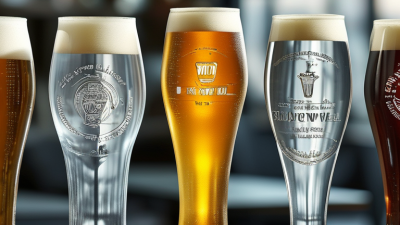
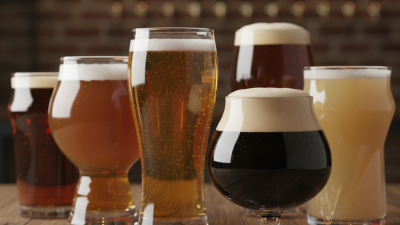
2026 Best Beer Glasses for Wholesale Buyers?
Choosing the right Beer Glasses for wholesale requires more than comparing prices and attractive product photos. Buyers must assess shape, capacity, rim quality, stability, packaging, and replacement risk. A glass that looks elegant on a tasting table may perform poorly in a busy bar. Thin stems can break during washing, while heavy bases increase shipping costs and handling fatigue.
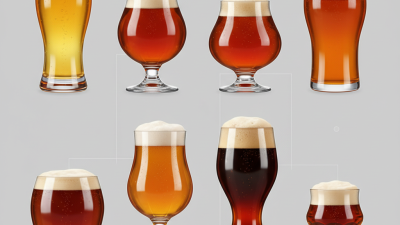
This 2026 guide examines beer glass options through a practical procurement lens. It considers common styles, including pint, tulip, pilsner, wheat beer, and tasting glasses. Each shape supports different serving experiences, from stable foam retention to clear color presentation. However, design claims should be tested with real samples. Marketing language is not enough.
Sample testing matters.
Wholesale buyers should inspect the glass under bright light. Look for uneven rims, bubbles, scratches, unstable bases, and inconsistent dimensions. Packaging also deserves attention, especially when cartons travel through several distribution points. Reliable suppliers should provide clear specifications, production details, food-contact documentation where applicable, and consistent communication.
No single glass fits every market. A hotel, craft brewery, restaurant chain, and promotional distributor may need different balances between appearance, durability, and cost. Some recommendations in this guide remain judgment calls, because washing systems, customer habits, and transport conditions vary. That limitation should be acknowledged, not hidden.
The goal is practical selection. This review helps buyers compare performance, presentation, and total purchasing value before placing larger orders.
Beer Glass Types and Their Best Use Cases for Wholesale Buyers
Choosing beer glasses for wholesale requires more than matching shapes to styles. Buyers must consider service speed, breakage, storage, and washing capacity. The National Restaurant Association’s 2024 report projected U.S. restaurant sales above $1 trillion, showing the scale of commercial beverage service. Every glass must perform repeatedly.
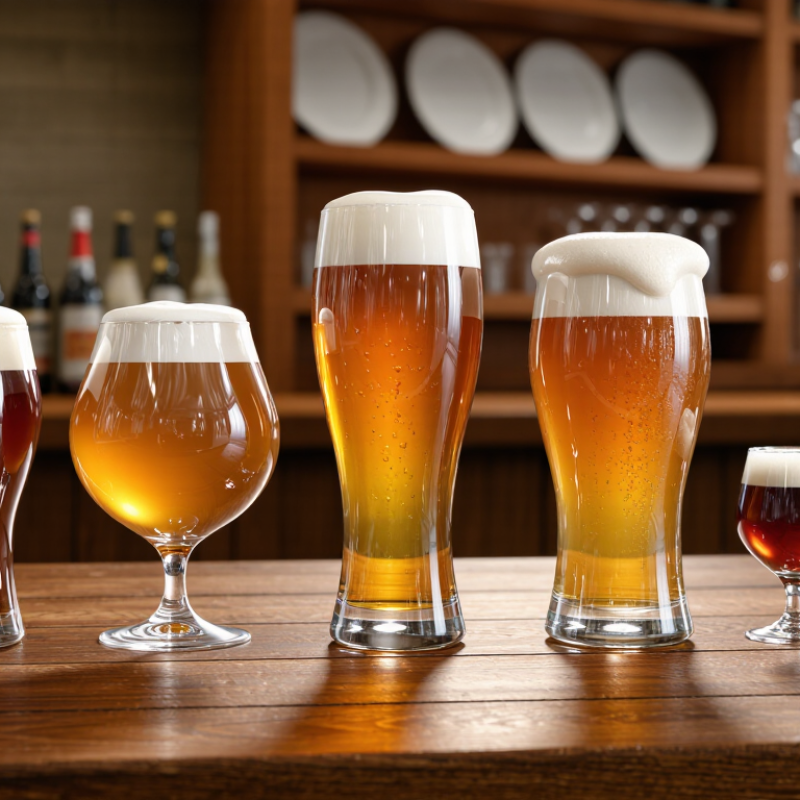
Pint glasses suit pubs, taprooms, and high-volume events. Their straight walls stack efficiently and support quick pouring. Tulip glasses work better for aromatic ales and stronger specialty beers. The curved bowl captures aroma, while the narrow rim supports focused tasting. Wheat beer glasses provide extra volume and foam space. Their tall profiles also make pale, cloudy pours visually attractive. Stemmed goblets fit slow-service dining and beer-pairing menus. They feel premium, but require more shelf space.
A practical wholesale range often combines pint, tulip, and wheat styles. According to the Brewers Association’s 2024 economic impact reporting, U.S. craft brewing generated roughly 79 billion dollars in 2023. That activity supports varied menus, not one universal glass. I have seen buyers choose elegant stemware, then struggle with storage and replacement costs. That mistake is easy to repeat. Check rim thickness, base stability, dishwasher ratings, and carton protection before ordering. A thinner rim may improve tasting, but it can increase breakage. A heavier glass survives busy shifts, although staff may dislike its weight. Test samples during a real service period. Product catalogs rarely reveal the whole story.
Key Features That Define High-Quality Beer Glassware
For wholesale buyers, high-quality beer glassware starts with controlled material and dependable production. Clear, lead-free glass should show no bubbles, cloudy patches, or sharp rim defects. The rim deserves special attention because small chips quickly become customer complaints. A balanced bowl also matters. It should feel stable without becoming unnecessarily heavy.
Grand View Research estimates the global glass packaging market reached about USD 82 billion in 2023. This growth increases supplier choice, but not every factory offers equal consistency. Ask for rim-strength testing, wall-thickness tolerances, and thermal-shock results. A glass surviving repeated dishwasher cycles is more valuable than one that only looks impressive in a sample carton. The European Container Glass Federation also states that glass is recyclable without quality loss, supporting responsible purchasing decisions. Yet recyclability does not excuse poor manufacturing.
Tips: Request pre-shipment samples from different production batches. Check the base, rim, clarity, and printed volume marks under bright light. Measure ten pieces, not one. Stackability, carton protection, and replacement rates can influence real costs more than the unit price. A heavier glass is not automatically stronger. I have seen thick bases paired with fragile rims, which is an easy detail to miss. For mixed beer menus, choose shapes that support aroma while remaining practical for storage and service. Some buyers may still overvalue appearance. That is worth reconsidering.
Wholesale Pricing, Packaging, and Minimum Order Considerations
Wholesale buyers should price beer glasses by landed cost, not factory price alone. Grand View Research valued the global glass packaging market at about USD 82.5 billion in 2023, with steady growth projected through 2030. That scale supports competitive sourcing, but freight can quickly erase a low quotation. Ask for separate prices for the glass, decoration, carton, pallet, and delivery. A 400 ml pint glass may look inexpensive until breakage, import duties, and warehouse handling are added.
Packaging needs practical testing. The International Safe Transit Association recommends testing products against vibration, compression, and impact risks during distribution. Request carton dimensions, gross weight, pallet quantity, and drop-test results before ordering. Corrugated dividers, paper sleeves, and stronger outer cartons usually cost more, yet they reduce chipped rims and broken bases. Plastic inserts can improve protection, but some buyers may reject them for sustainability reasons. There is no perfect option.
Minimum order quantities often range from 1,000 to 10,000 pieces, depending on tooling and decoration. Plain clear glasses usually allow lower MOQs than colored or printed versions. Confirm whether the MOQ applies per design, size, or total shipment. Sample approval should include rim thickness, capacity, logo position, and dishwasher resistance. We still get this wrong sometimes: a sample can pass inspection while the production color shifts slightly. Keep a signed reference sample and allow a realistic tolerance in the purchase agreement. Reference: Grand View Research, Glass Packaging Market Report; International Safe Transit Association, Transit Packaging Performance Testing.
Quality Control, Customization, and Supplier Selection Criteria
2026 Best Beer Glasses for Wholesale Buyers?
In 2026, wholesale beer glass buying is less about appearance and more about repeatable quality control. Buyers should request written specifications for capacity, rim thickness, height, weight, and glass clarity. A 500-milliliter glass should not vary noticeably between production batches. Inspect random cartons, not only showroom samples. Check for sharp rims, bubbles, cloudy areas, unstable bases, and hairline cracks. Drop testing and dishwasher-cycle testing can reveal weaknesses that photographs hide.
Customization should support practical use, not create expensive decoration. Confirm logo position, printing durability, color accuracy, and minimum order quantities before approving artwork. A useful sample includes the final glass shape, decoration method, and packaging. Ask for a signed pre-production sample. Small details matter. One millimeter of rim variation can affect drinking comfort and stacking stability. I would also test how the printed surface feels after repeated washing. Many buyers skip this step, and that shortcut can damage an otherwise strong order.
Supplier selection requires evidence, not confident promises. Review factory inspection records, material declarations, production capacity, and corrective-action procedures. Ask who checks the glass during forming, annealing, decorating, and packing. Clear answers indicate operational control. Vague answers deserve more questions. Compare lead times with realistic buffer days, especially before seasonal demand. Request photos of packed pallets and carton drop tests. A supplier may offer a low unit price, yet weak packaging can increase breakage and replacement costs. That trade-off is easy to underestimate.
2026 Best Beer Glasses for Wholesale Buyers
Common nominal beer-glass capacities to support quality control, customization, and supplier selection decisions.
The chart compares commonly used nominal capacities from 250 mL to 1,000 mL. Wholesale buyers should confirm the actual brim capacity, fill line, dimensional tolerance, glass thickness, decoration durability, and food-contact compliance with each supplier before placing an order. The 568 mL size represents the UK imperial pint, while the 473 mL US pint is not shown as a standard glass category.

 +86 183 6377 3366
 Contact Email