inquiry
Leave Your Message

How to Choose Wine Bottles for Global Shipping?

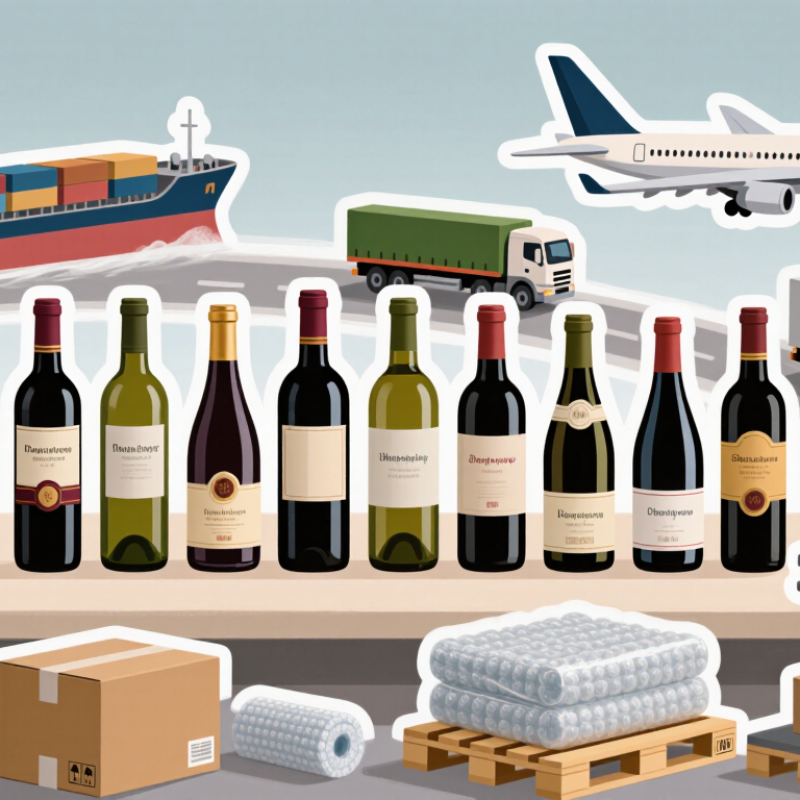
Choosing Wine Bottles for global shipping requires more than selecting an attractive shape. The right bottle must survive vibration, temperature changes, stacking pressure, and repeated handling. A beautiful design means little if the neck arrives chipped or the closure loses its seal.

In export projects, packaging teams often compare bottle weight, glass thickness, shoulder design, and base strength. A heavier bottle may feel premium, but it can increase freight costs and handling risks. Lightweight glass can reduce emissions, yet it may demand better protective packaging. The balance is rarely obvious.

Testing should reflect real transport conditions. Use drop tests, compression tests, vibration simulations, and temperature checks before approving a shipment. Inspect cartons, dividers, cushioning, and pallet patterns together. One weak component can damage an entire case. Confirm dimensions with carriers and packaging suppliers. Small measurement errors can create costly loading problems.

No bottle choice is perfect. A design that performs well on one route may struggle on another. We still need to review breakage data, customer feedback, and warehouse observations after each shipment. That feedback turns assumptions into practical improvements.

Reliable selection also requires cooperation with qualified glass manufacturers, logistics providers, and compliance specialists. Check destination-market labeling, packaging, recycling, and transport requirements before production. Rules and carrier expectations can differ between countries. Accurate documentation protects the shipment and supports responsible global trade.

This guide explains how to evaluate Wine Bottles for safer, more efficient international delivery. It focuses on practical testing, material decisions, cost control, and continuous improvement. The goal is simple: protect the product without creating unnecessary weight, waste, or uncertainty.
How to Choose Wine Bottles for Global Shipping?

Define the 750 mL Bottle and 12-Bottle Case Shipping Baseline

When choosing wine bottles for global shipping, start with a clear baseline: one 750 mL bottle and one 12-bottle case. This format supports consistent pallet planning, freight quotes, and warehouse measurements. A filled 750 mL bottle commonly weighs about 1.2 to 1.5 kilograms, depending on glass thickness and closure. Twelve bottles can therefore create a case near 15 to 19 kilograms. Confirm the actual weight before booking transport.

Bottle shape matters as much as volume. Tall, narrow bottles may need different dividers than wider designs. Heavy glass can improve protection, but it also increases freight costs and handling strain. Use strong internal partitions, corner protection, and moisture-resistant outer cartons. Test packed cases with vibration, stacking, and controlled drop trials. One test is not enough. Real routes include rough transfers and changing temperatures. I have found that packaging plans often look reliable until a corner is crushed.

Tips: Keep the 750 mL bottle as your measurement reference. Record bottle height, diameter, filled weight, and case dimensions. Leave enough clearance for protective inserts, but avoid unnecessary movement. Mark the case orientation clearly, although markings alone cannot prevent poor handling. Review the design after every shipment, especially when breakage or carton deformation appears. A slightly heavier case may reduce damage, yet the balance is not always obvious. Shipping data should guide the final choice.

How to Choose Wine Bottles for Global Shipping? — Define the 750 mL Bottle and 12-Bottle Case Shipping Baseline
Shipping Dimension 750 mL Bottle Baseline 12-Bottle Case Baseline Planning Guidance
Nominal wine capacity 750 mL 9.0 L total wine Use 750 mL as the standard reference size for comparing bottle and case logistics.
Bottle height Approximately 300–330 mm
(11.8–13.0 in)
Case internal height: approximately 320–350 mm
(12.6–13.8 in)
Confirm the actual bottle profile before finalizing carton height, dividers, or pallet clearance.
Bottle diameter Approximately 75–85 mm
(3.0–3.3 in)
Typical 4 × 3 layout footprint:
approximately 320 × 250 mm
Round bottles are commonly arranged in a 4-by-3 case pattern, but shoulder and punt shapes affect fit.
Empty glass bottle weight Approximately 400–700 g
(0.88–1.54 lb)
Approximately 4.8–8.4 kg
(10.6–18.5 lb), excluding packaging
Heavier glass improves perceived robustness but increases freight cost and handling weight.
Filled bottle weight Approximately 1.15–1.35 kg
(2.54–2.98 lb)
Approximately 13.8–16.2 kg
(30.4–35.7 lb), excluding the case
The estimate includes 750 mL of wine plus the bottle, closure, capsule, and label.
Recommended case configuration 1 bottle per protective cell 12 bottles in a 4 × 3 arrangement Use molded pulp, reinforced corrugated dividers, or certified protective inserts to limit bottle-to-bottle contact.
Typical outer case size Not applicable Approximately 350–390 × 270–310 × 330–370 mm
(13.8–15.4 × 10.6–12.2 × 13.0–14.6 in)
Allow space for cushioning, divider walls, carton compression, and closure protection.
Estimated gross case weight Not applicable Approximately 16–20 kg
(35–44 lb)
Includes wine, bottles, dividers, carton, and basic protective materials. Verify with a production sample.
Case packaging specification Protective individual separation Double-wall corrugated outer case recommended Select board strength according to stacking height, humidity exposure, route length, and transport mode.
Stacking and pallet planning Keep bottles upright where required by the packaging design Common planning range: 48–60 cases per standard pallet layer-and-stack plan, subject to pallet limits Do not exceed the case compression rating, pallet height limit, or carrier weight limit. Validate the final pattern physically.
Dimensional-weight check Use the packed bottle dimensions Billable weight may exceed actual weight Compare actual gross weight with the carrier’s dimensional-weight formula and applicable divisor before quoting freight.
International shipping protection Protect neck, shoulder, base, and closure Use a leak-resistant, impact-resistant case system Account for vibration, drops, compression, temperature changes, and humidity during multimodal transport.
Baseline validation step Measure a filled production bottle Drop-test and compression-test a complete packed case Actual bottle shape, glass weight, closure type, carton grade, and destination rules can materially change the final specification.

Note: Values are practical planning ranges for standard 750 mL wine bottles and 12-bottle cases. Final shipping specifications should be based on measured production samples and verified against the requirements of the selected carrier, destination, and packaging regulations.

Compare 300–900 g Glass Weights Against Freight and Breakage Risks

How to Choose Wine Bottles for Global Shipping?

Compare 300–900 g Glass Weights Against Freight and Breakage Risks

Bottle weight changes more than the product feel. A 300 g bottle lowers unit freight cost and increases pallet capacity. Yet thin glass can crack under compression, vibration, or sharp temperature changes. A 900 g bottle offers more material, but it adds weight to every case. The extra kilograms may increase freight charges and reduce shipping efficiency.

A reliable choice comes from testing, not appearance. Compare 300 g, 600 g, and 900 g samples in the same carton. Record corner impacts, bottle-to-bottle contact, closure damage, and leakage. Test full pallets, not only single boxes. Route conditions matter. Rough inland roads can expose weak packaging sooner than ocean transport. A heavier bottle may survive impact, while poor dividers still cause neck damage. Weight alone failed.

Tips: Start with 600 g when the route is uncertain. Reduce weight after drop and vibration tests pass. Use molded dividers, controlled empty space, and strong carton edges. Measure freight per sellable bottle, not per bottle alone. Keep a breakage log by route and season. Recheck the design after changing pallet height or carton count. Some assumptions will be wrong.

Select Bottle Shapes That Improve Pallet Density Beyond 60 Cases

Choosing wine bottles for global shipping starts with pallet geometry, not appearance. The OIV’s 2024 sector report places global wine exports near 100 million hectolitres in 2023. Small packaging decisions therefore scale quickly.

On a 1200 × 1000 millimetre pallet, verified case dimensions can push capacity beyond 60 cases.

A 12-bottle case measuring about 330 × 250 millimetres may allow 12 cases per layer.

Use bottles with consistent diameters, moderate shoulder curves, and minimal base protrusion. Straight-sided Bordeaux-style bottles often create tighter case layouts than heavily tapered designs. A 12-bottle case measuring about 330 × 250 millimetres may allow 12 cases per layer. Five stable layers can reach 60 cases, while slimmer cases may support a sixth layer.

Measure the actual bottle, case, divider, and pallet together. Do not trust catalogue dimensions alone. A two-millimetre increase can disrupt an entire row. ISO 6780 pallet dimensions provide a useful planning reference, while ISTA 3E testing evaluates unitized loads under distribution hazards. Test compression, vibration, and corner impacts before approving a new shape. The load must remain stable after stretch wrapping, temperature changes, and forklift handling.

I have seen attractive bottles waste space at every layer. A neat spreadsheet can still lie.

Pallet trials should record cases per layer, total height, gross weight, and visible glass contact points. Beyond 60 cases, the best result may require a less distinctive silhouette, stronger dividers, or a smaller case footprint. Density matters, but one damaged bottle can erase the freight savings.

Specify Cushioning to Meet ISTA 3A and ASTM D4169 Testing

How to Choose Wine Bottles for Global Shipping?

Wine bottles face repeated drops, vibration, compression, and temperature changes during global shipping. The bottle alone is not the full packaging system. A narrow glass bottle may need different protection than a heavy, wide bottle. Closure type, fill level, label position, and carton orientation also affect damage risk.

Specify cushioning against ISTA 3A and ASTM D4169 testing requirements. ISTA 3A can simulate parcel delivery, including impacts, vibration, and handling drops. ASTM D4169 helps evaluate distribution hazards, such as compression and repeated vibration.

Use molded pulp, foam, or engineered inserts to control movement around the bottle. Keep the glass away from carton walls. Leave enough space for protective material, but avoid loose packing.

Test filled bottles in their real shipping configuration. Empty bottles can give misleading results. Check the weakest position, not only the best-packed sample.

A practical protocol should record drop height, vibration exposure, compression load, temperature, and breakage location. Inspect caps, corks, labels, and cartons after testing.

Small gaps matter.

One common mistake is specifying cushioning by thickness alone. Material density, recovery, bottle weight, and carton strength matter more. Test data should guide revisions, even when the first design seems successful.

No test plan perfectly matches every route. Airport handling, road vibration, and warehouse stacking may still expose weaknesses. That uncertainty deserves honest documentation.

Verify Pallet Loads, Temperature Ranges, and 99.5% Delivery Integrity

Choosing wine bottles for global shipping starts with measurable handling conditions, not appearance. The OIV’s 2024 report estimated 2023 global wine production at 237 million hectolitres, showing the scale of long-distance movement. At that volume, a small packaging weakness becomes expensive. Select bottles with consistent dimensions, strong glass distribution, and cartons with fitted dividers. Calculate pallet height and weight from actual bottle geometry. Carton counts alone can mislead.

Build the pallet around a verified load pattern. Keep heavier cartons at the bottom, limit overhang, and record compression, tilt, and drop-test results. ISTA 3E testing offers a practical framework for unitized pallet shipments. Temperature needs equal discipline. A 10–20°C range suits many still wines, unless the producer specifies otherwise. Use data loggers inside representative cartons. A brief 25°C excursion may affect sensitive wines, while freezing conditions can damage closures and expand liquid.

The 99.5% delivery-integrity target allows only five failed units per 1,000 shipments. Define “failure” clearly: breakage, leakage, temperature excursion, or delayed delivery. The World Bank’s 2023 Logistics Performance Index evaluates tracking, timeliness, and shipment quality, but it does not guarantee a universal 99.5% result. That gap matters. Review lane-level records, not averages. We sometimes overtrust a perfect pallet diagram. Real containers shift, forklifts strike, and sensors fail. Recheck the design after each seasonal route, even when recent deliveries look clean.

How to Choose Wine Bottles for Global Shipping?

Verify pallet loads, temperature ranges, and the 99.5% delivery-integrity target.

Pallet footprint check

Euro pallets measure 1,200 × 800 mm; common North American GMA pallets measure 48 × 40 in. Confirm case dimensions, layer pattern, height, and gross weight before booking.

Temperature planning

The chart shows commonly used serving and storage bands, not universal regulatory limits. Use a validated temperature profile for the selected route and packaging.

Delivery integrity target

99.5% is shown as a planning KPI target. Measure it with shipment records, breakage reports, temperature loggers, and delivery confirmations.