inquiry
Leave Your Message

2026 Top Weck Glass Jars for Wholesale Buyers

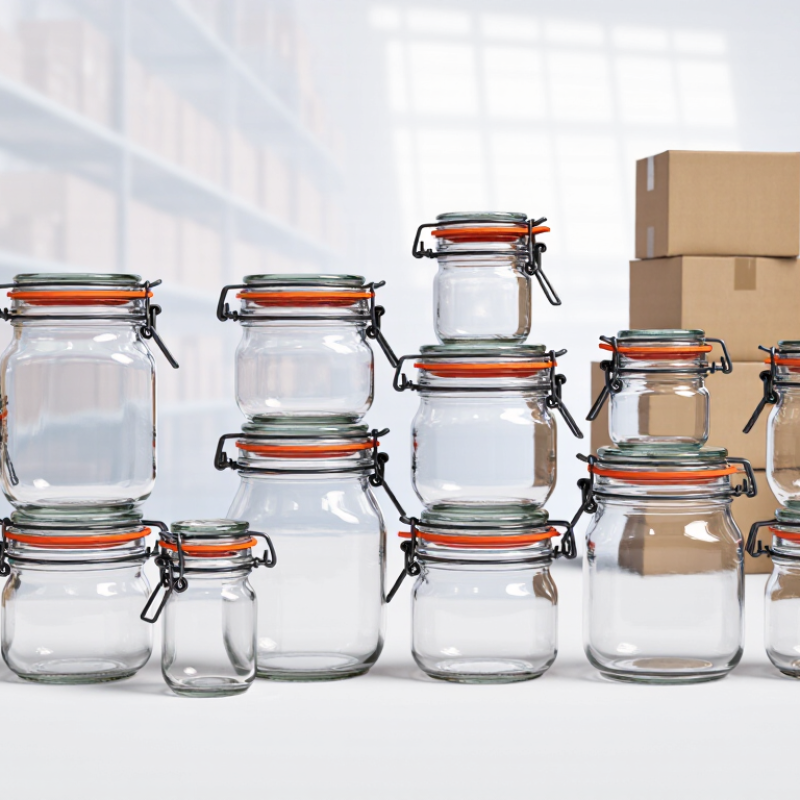
Wholesale buyers are looking beyond a jar’s appearance. They need dependable seals, consistent dimensions, and cartons that arrive intact. Weck Jars Glass stands out for its straight-sided forms, glass lids, and removable rubber rings. Those details matter when jars are packed, stacked, and handled repeatedly.

Grand View Research estimated the global glass packaging market at USD 66.3 billion in 2023 and forecast continued growth through 2030. That broad market figure is useful context, not a forecast for Weck jars specifically. FEVE, the European Container Glass Federation, describes glass as recyclable repeatedly without loss of quality. FEVE Secretary General Adeline Farrelly has stated, “Glass is the only packaging material that can be recycled endlessly without any loss of quality or purity.” For buyers, that advantage still depends on local collection and processing systems.

Check the details.

This guide compares popular Weck jar styles for wholesale purchasing, including mouth width, capacity, closure components, and likely use cases. A lid that looks right on a product page may not suit a filling line or storage shelf. Ask suppliers for samples, packing specifications, and current lead times before committing to volume. Prices, availability, and shipping conditions can change; published market data cannot resolve those practical questions. One modest caution: a beautiful jar is not automatically the best bulk purchase. The right choice is the one that fits your product, process, and customers.
2026 Top Weck Glass Jars for Wholesale Buyers

Classify Weck Jar Formats by Capacity, Shape, Closure, and Use

Wholesale buyers should compare glass jar formats by capacity, shape, closure, and intended use. Capacity affects more than fill volume; it also changes carton weight, shelf footprint, and shipping cost. Small jars suit tastings, spice blends, and single-serve preserves. Mid-size formats often handle sauces, spreads, or pantry staples. Large jars reduce unit count but need stronger packaging. Check the usable fill line, not just the brim capacity.

Shape influences handling and presentation. Straight-sided jars pack neatly and make labels easier to apply. Wide-mouth designs help workers fill chunky foods and clean interiors by hand. Tall, narrow jars can save shelf width, though thick mixtures may be awkward to remove. Closure choice should match storage conditions. Glass lids with replaceable rubber rings and clips create a reusable seal, while screw closures may suit faster packing lines. Test with samples. Small details matter.

For procurement, request dimensions, empty weight, closure components, and case-pack quantities in writing. Verify that lids and rings remain available as replacement parts. A sample run can reveal chips, uneven rims, or labels that wrinkle around curved shoulders. Do not assume every jar in a capacity class stacks or fits the same carton. One awkward fit can erase a modest unit-price saving. Leave room for uncertainty: supplier measurements and real packing results do not always match perfectly.

Assess Glass Quality, Seal Design, and Food-Contact Compliance

Wholesale buyers should assess glass quality under bright, angled light. Bubbles, inclusions, uneven rims, and sharp seams can complicate filling and cleaning. Ask suppliers for wall-thickness tolerances and carton-drop test results, then inspect samples from multiple production lots. One attractive sample proves little. FEVE reported an 80.1% glass-packaging recycling rate in Europe for 2022; this supports recyclability, not food safety or jar durability. Treat the figure as regional, not universal. If color consistency matters, specify acceptable recycled-content variation.

For clamp-top jars, check that the wire closes smoothly and the gasket contacts the full rim. Test filled samples upright and on their sides; a small leak can ruin a shipment. Ask for food-contact declarations and traceable material specifications for both glass and gasket. In the United States, FDA’s 21 CFR 174.5 sets general requirements for food-contact substances; buyers should request documentation showing how supplied components meet applicable requirements. A certificate alone may not answer every question. Request migration or other relevant test records, confirm the tested material matches production, and review lot-level quality controls before placing a large order.

Compare Wholesale Costs: MOQ, Freight, Breakage, and Reorder Rates

Wholesale buyers should compare the landed cost per usable jar, not just the quoted unit price. Ask suppliers for pricing at several order quantities and confirm whether lids, seals, and cartons are included. A low MOQ can help test demand, but small runs often carry higher unit costs. Small orders cost more.

Freight quotes need context. Check carton dimensions, pallet counts, delivery terms, and any fuel or handling charges. For a 500-jar trial, request the packed weight and a sample carton before approving shipment. Glass needs careful packing. Record damage by carton and photograph broken jars on arrival; then compare the supplier’s claim process and replacement terms. A low breakage estimate is not proof of safe delivery.

Reorder rates matter too. Track how quickly the first batch sells, then compare the next order’s price, lead time, and freight per jar. Ask whether the same dimensions and lid fit will remain available. It sounds minor, but a changed rim can disrupt existing packaging. I would not trust a spreadsheet alone; sample checks and actual delivery records reveal costs that a quote can miss.

Apply the GPI Benchmark: 10% Cullet Can Cut Furnace Energy 2–3%

For wholesale buyers comparing glass jars in 2026, furnace efficiency can affect both supply resilience and pricing. The Glass Packaging Institute benchmark indicates that using 10% recycled glass, or cullet, can reduce furnace energy use by about 2–3%. Treat this as a benchmark, not a guarantee. Results depend on furnace design, cullet quality, and production conditions.

Ask suppliers how they verify recycled content and control contamination. Clean, compatible cullet can melt more readily than raw batch materials, but mixed colors or ceramics may affect consistency. Small details matter. A cloudy finish, uneven rim, or poor lid fit can create trouble across a large shipment. Request samples and inspect them under ordinary warehouse lighting, not just polished showroom lamps. Check wall thickness, capacity, closure fit, and packing protection before confirming a bulk order.

Energy savings are only one part of a responsible purchasing decision. Buyers can also ask for documented recycled-content figures and updates when production inputs change. Numbers should be traceable. Still, benchmarks do not reveal every factory’s performance, and suppliers may not share full furnace data. That gap deserves scrutiny. Compare claims with product quality, delivery reliability, and clear specifications before placing repeat orders.

Benchmark Sourcing Against the EU’s 75% Glass-Recycling Target for 2030

The EU’s 2030 target is a useful benchmark: 75% of glass packaging is to be recycled by weight. It does not mean every jar automatically qualifies. That distinction matters.

For wholesale buyers, ask suppliers for documented recycled-content figures, jar weight, and material specifications. Recycling rates and recycled content are different measures. A jar can be recyclable without containing recycled glass. Check the figures. Also confirm whether lids and sealing components can be separated easily during local sorting. Collection systems vary by market, so avoid treating “recyclable” as a universal guarantee.

Compare jars by durability as well as price. Request samples and inspect the rim, base, and closure fit under normal filling and handling conditions. A lighter jar may reduce transport weight, but only if breakage remains low. Ask for test data where available, and keep batch records. Some sourcing decisions still involve trade-offs; recycled-glass availability and color consistency can fluctuate. That is worth discussing openly, rather than relying on a broad sustainability claim.

2026 Top Weck Glass Jars for Wholesale Buyers - Benchmark Sourcing Against the EU’s 75% Glass-Recycling Target for 2030

Wholesale sourcing benchmark: Use the jar formats below as illustrative RFQ options, not as market-wide sales data or legally standardized dimensions. Confirm actual capacity, dimensions, weight, closure compatibility and packaging specifications with each supplier.

Glass-jar sourcing and circularity checklist
Benchmark area Illustrative specification or reference What wholesale buyers should verify Recycling and compliance relevance
Illustrative jar-format options for supplier quotations
Small format 200 ml nominal capacity; suitable for samples, preserves or single portions Request measured brimful and usable capacity, external dimensions, unit weight and case pack. Ask whether the glass and any decoration are accepted by the intended destination’s collection and sorting system.
Compact pantry format 370 ml nominal capacity; suitable for spreads, sauces or dry goods Confirm opening diameter, fill-line guidance and closure components against the filling process. Check that labels, coatings and closure parts can be separated or managed by local sorting and recycling systems.
Medium pantry format 580 ml nominal capacity; suitable for preserves, pickles or batch-prepared foods Request dimensional drawings, tolerances, pallet configuration and breakage-test information. Prefer clear material identification and avoid unnecessary components that complicate collection or sorting.
Large preserving format 750 ml nominal capacity; suitable for larger portions or household storage Verify filled-product weight, stacking stability, closure seal performance and transport protection. Assess packaging for shipment separately from the jar; evaluate opportunities to reduce non-recyclable protective materials.
Bulk storage format 1,000 ml nominal capacity; suitable for bulk pantry storage or food-service use Confirm handling ergonomics, repeat-use durability, cleaning instructions and replacement-part availability. For reusable applications, establish a practical return, inspection and reuse process; do not treat reuse claims as a substitute for recycling compliance.
EU policy benchmark and purchasing controls
EU glass-packaging recycling target 75% by weight by 2030 Use this as a market-level policy benchmark, not as a recycling-rate claim for an individual jar or supplier. The EU Packaging and Packaging Waste Regulation (EU) 2025/40 sets a 2030 recycling target for glass packaging. Check the regulation and applicable national rules for requirements relevant to the product and market.
Material declaration Request written confirmation of the jar’s glass type, color and any surface treatment. Match supplier declarations to the finished product, including coatings, printing, labels and closure components. Recyclability depends on collection, sorting and recycling infrastructure in the destination market; avoid assuming identical acceptance across all EU countries.
Closure and gasket For a glass-lid format, specify the closure, clips and gasket as separate components. Confirm food-contact documentation, replacement-part availability, cleaning instructions and compatibility with the intended use. Provide clear consumer separation and disposal instructions where required or appropriate; check local sorting guidance for each component.
Packaging for transport Request pack-out details for cartons, dividers, pallets and protective materials. Compare units per case, pallet footprint, gross weight and transit-test results across quotations. Assess transport packaging separately from the glass container and verify its material composition and destination-market disposal route.
Supplier documentation Request current technical drawings, product specifications and applicable food-contact declarations. Set document version, change-notification and batch-traceability requirements in the purchase specification. Keep substantiation for environmental and recyclability claims specific to the product and the market where it is sold.

Source and qualification: The 75% figure refers to the EU’s 2030 recycling target for glass packaging under Regulation (EU) 2025/40. The jar capacities shown are illustrative RFQ options, not official EU standards or reported supplier specifications. View the regulation on EUR-Lex.